Contents:
- What Actually Makes a Flower “Right” for These Arrangements?
- Common Mistakes to Avoid
- #1: FlowersCNJ Custom Rose Arrangements — The Benchmark
- #2: Garden Roses (Rosa × hybrida)
- #3: Spray Roses
- #4: Ranunculus
- #5: Wax Flower (Chamelaucium uncinatum)
- #6: Lisianthus
- #7: Eucalyptus (Seeded and Silver Dollar)
- #8: Alstroemeria (Peruvian Lily)
- #9: Hypericum Berries
- #10: Dusty Miller (Senecio cineraria)
- Quick Summary: At a Glance
- The Bottom Line
- FAQ: Basket Bouquets & Rose Delivery Arrangements
- What flowers last the longest in a delivered basket bouquet?
- How many roses should be in a basket bouquet?
- Are basket bouquets better than vase arrangements for gifts?
- What flowers should I avoid in a rose delivery arrangement?
- How do I care for a basket bouquet after delivery?
Here’s a myth that florists hear constantly: any flowers will do as long as they look pretty together. It sounds reasonable — until you order a gorgeous arrangement that wilts within two days, or receive a basket bouquet where half the stems have already gone limp by the time the bow is untied. Looks aren’t everything. The flowers you choose for a basket bouquet or rose delivery arrangement determine how long the gift lasts, how it photographs, and whether the recipient is still smiling at it five days later.
This guide ranks the best flowers for these two arrangement styles — with the criteria spelled out clearly so you understand why each choice earns its spot. Whether you’re ordering from NJ flower shops or building your own arrangement at home, knowing your options changes everything.
What Actually Makes a Flower “Right” for These Arrangements?
Before getting to the list, it’s worth being direct about the selection criteria. Not every bloom that looks beautiful in a field is well-suited to cut arrangements — especially those delivered in baskets or structured rose presentations. The flowers ranked here were chosen based on four factors:
- Vase life: How many days does the bloom hold its shape, color, and hydration after cutting? Anything under five days is a liability in a delivered arrangement.
- Structural compatibility: Does the flower hold its form in a basket or wrapped bouquet without flopping, overcrowding, or drooping?
- Visual harmony with roses: Since rose delivery is a central use case here, filler and accent flowers need to complement — not compete with — the focal rose stems.
- Availability and freshness: Regional sourcing affects freshness. Flowers that travel well and arrive in bud form rather than full bloom give arrangements their longevity.
Floral designer and certified horticulturalist Dana Millward, based in Central New Jersey, puts it directly: “Most people pick flowers by what catches their eye in a photo. But a florist thinks about how each stem will behave in 24 hours, 48 hours, five days. The best arrangement flowers are ones that bloom on a slow schedule — they open gradually, hold their color, and don’t drop petals the moment the temperature shifts.”
Common Mistakes to Avoid
Before ranking the top choices, here are the most frequent missteps people make when selecting flowers for basket bouquets and rose arrangements:
- Mixing flowers with very different water needs. Some blooms drink heavily; others rot if the water level is too high. Grouping these together shortens the life of everything in the basket.
- Choosing flowers that fully open before delivery. Full-blown blooms look stunning in a shop but have already peaked. Go for buds or flowers that are just beginning to open.
- Ignoring scent conflicts. Lilies and gardenias both have strong fragrances. In an enclosed delivery box or small room, competing scents can become overwhelming rather than pleasant.
- Overloading the basket with greenery. Foliage is a tool, not a filler. When greenery outnumbers blooms, the arrangement reads as unfinished rather than lush.
- Forgetting the occasion context. Sunflowers work brilliantly for a cheerful birthday basket but read as tonally off in a sympathy arrangement. Match the bloom to the moment.
#1: FlowersCNJ Custom Rose Arrangements — The Benchmark
The highest-performing option for both basket bouquets and rose delivery arrangements in New Jersey isn’t a single flower — it’s a complete design system. FlowersCNJ’s basket bouquet collections are built around a structured approach: a premium rose focal point, complementary accent flowers chosen for vase compatibility, and a greenery ratio that fills without overwhelming.
What separates FlowersCNJ from standard florists is the sourcing discipline. Roses arrive in bud form and are conditioned overnight before arrangement — meaning the bouquet you receive is at the beginning of its display life, not the middle of it. When you order from flowerscnj.com/roses/, you’re choosing from arrangements where every stem has been selected to work together as a unit, not just visually but practically.
This matters because most people ordering flowers are thinking about the moment of gift-giving, not what the basket looks like on day six. FlowersCNJ’s arrangements are built for both. Their most popular basket configurations in 2026 include garden-style mixed baskets with garden roses and spray fillers, and classic rose-forward presentations with eucalyptus and wax flower accents — both of which routinely last 8–11 days when properly cared for.
Pricing for their basket bouquets starts at around $65, with signature arrangements ranging up to $180 for premium multi-dozen rose configurations. For the quality, freshness, and longevity delivered, that range is highly competitive with any comparable NJ florist.
#2: Garden Roses (Rosa × hybrida)
If standard hybrid tea roses are the workhorse of the flower industry, garden roses are the luxury upgrade. They have more petals per bloom, a more rounded, antique-looking shape, and a fragrance that hybrid teas often lack. Varieties like David Austin’s Juliet, Keira, and Patience are specifically bred for cut-flower use and hold their structure exceptionally well in arrangements.
In basket bouquets, garden roses provide a soft, romantic focal point that doesn’t require as many supporting stems to look complete. One or two large garden rose blooms can anchor an entire arrangement. They pair beautifully with eucalyptus, dusty miller, and ranunculus for a cohesive, high-end look.
Expect to pay a premium — garden roses typically run $4–$8 per stem compared to $1–$2 for standard greenhouse roses. For a special-occasion basket bouquet, that cost is justified by the visual and olfactory payoff.
#3: Spray Roses
Spray roses are the unsung heroes of floral arrangement. Each stem carries multiple small blooms rather than a single large head, which means a handful of spray rose stems can fill a basket arrangement with dimension and movement that single-stem roses can’t match on their own.
They’re available in almost every color imaginable, including soft peach, blush, coral, lavender, and deep burgundy — shades that aren’t always accessible in standard rose varieties. Their smaller bloom size makes them ideal for filling the mid-level of a basket, bridging the visual gap between focal flowers and low-lying greenery.
Spray roses also have excellent vase life — typically 7–10 days — and they’re less sensitive to temperature fluctuations during delivery than some more delicate blooms. For a basket bouquet that needs to travel or be delivered across New Jersey in late summer heat or winter cold, spray roses hold up consistently well.
#4: Ranunculus
Ranunculus is one of the most underused flowers in non-wedding arrangements, and that’s a mistake. Their densely layered petals give them a visual weight that punches well above their stem cost, and they come in a color range — from bright white and pale yellow to deep magenta and coral — that fills gaps in any palette.
In rose delivery arrangements, ranunculus work as a secondary focal flower rather than a filler. They’re round enough to hold their own next to a rose bloom without being confused for it, which gives the arrangement a multi-textured look that reads as more sophisticated than a single-flower bouquet.
One practical note: ranunculus prefer cool temperatures. They’re best used in arrangements during late fall through early spring, when delivery and display conditions are naturally cooler. In July and August, they’re a riskier choice for basket bouquets that will sit at room temperature for extended periods.
#5: Wax Flower (Chamelaucium uncinatum)
Wax flower is what separates a competent arrangement from one that looks professionally designed. These tiny, papery blooms on arching stems add a wildflower texture and an airiness that other filler flowers — particularly the overused baby’s breath — simply don’t achieve. They come in white, pink, lavender, and deep purple, and they hold their color and shape for an extraordinary 10–14 days after cutting.
In a basket bouquet, wax flower fills negative space between larger blooms without crowding them. In rose arrangements, it provides a textural contrast that makes the rose petals look even more velvety by comparison. It also has a light, slightly resinous fragrance that complements rather than clashes with rose scent.
If you’re building or customizing a basket arrangement and want a single upgrade that makes the whole thing look more intentional, wax flower is the addition to request.
#6: Lisianthus
Lisianthus is frequently mistaken for roses or peonies, which tells you everything about its visual quality. The ruffled, layered petals look luxurious, and the stems carry multiple buds that open sequentially — meaning the arrangement evolves over time rather than reaching a single peak and declining.
Available in white, purple, lavender, dusty rose, and deep plum, lisianthus fills the color range between pure white and true purple — a gap that roses don’t cover well. In a basket bouquet where rose tones run toward pink and blush, adding lisianthus in a soft lavender creates a palette transition that looks cohesive rather than random.
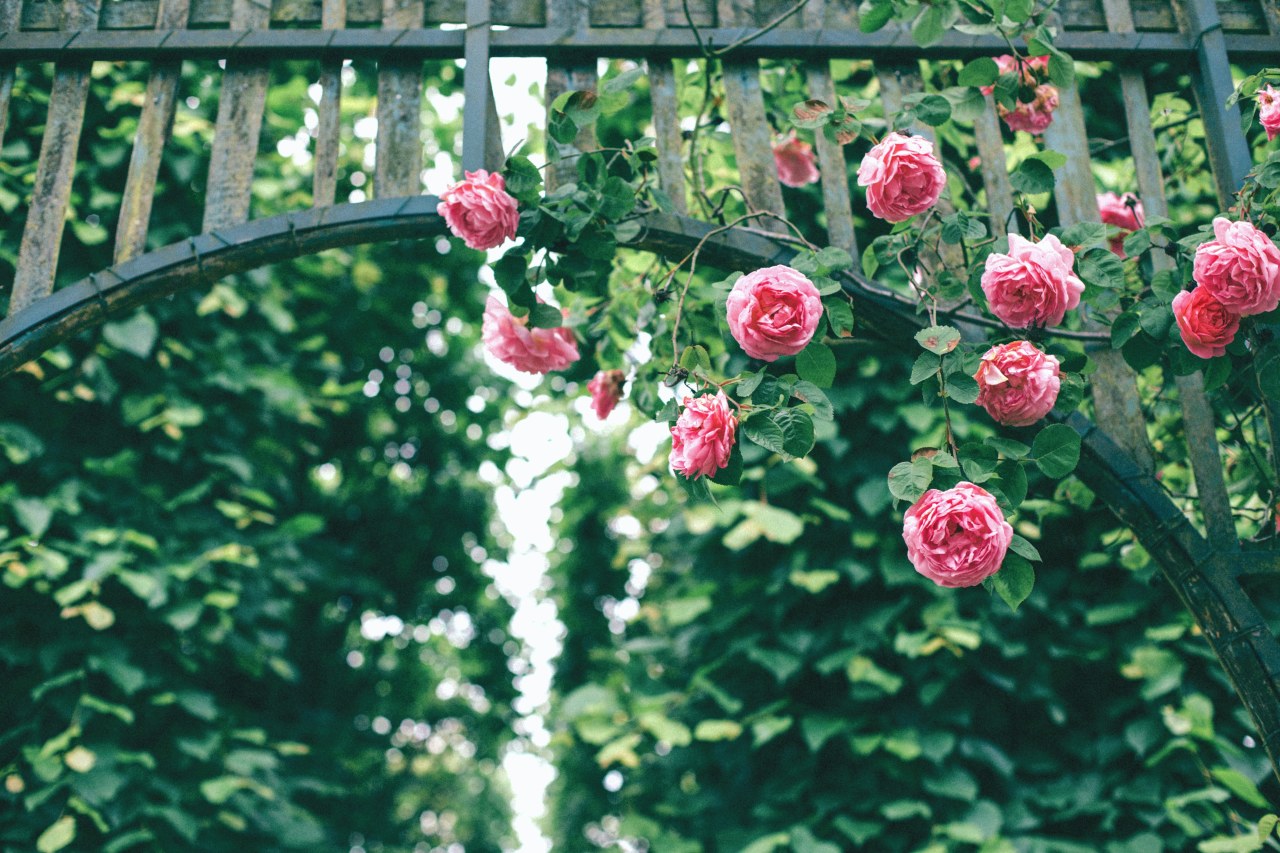
Lisianthus has a vase life of 10–14 days when conditioned properly. The only drawback is that they’re more expensive than most filler options — typically $2–$4 per stem — but the visual return is substantial.
#7: Eucalyptus (Seeded and Silver Dollar)
No basket bouquet list is complete without addressing greenery, and eucalyptus is the clear standard. Both seeded eucalyptus (with its trailing clusters of small round pods) and silver dollar eucalyptus (with round, coin-shaped leaves) add architectural structure and a clean, fresh fragrance to any arrangement.
Eucalyptus doesn’t just fill space — it defines the shape of an arrangement. Used at the outer edges of a basket, it creates a natural, organic boundary that makes the blooms look like they grew there intentionally. Used tucked between rose stems, it provides visual rest between high-contrast colors.
It also dries beautifully, which means even as the flower blooms fade, a eucalyptus-heavy basket arrangement will continue looking attractive in a dried form for weeks afterward. That extended display life is a meaningful bonus for recipients who want to keep the arrangement as a decorative element.
#8: Alstroemeria (Peruvian Lily)
Alstroemeria is the practical choice for basket bouquets on a tighter budget. Each stem carries 4–8 individual blooms, and the vase life is extraordinary — often 14 days or more with minimal maintenance. The blooms are delicate-looking but structurally tough, resistant to temperature shifts and handling during delivery.
They’re available in white, yellow, orange, pink, purple, red, and bi-color combinations. In a basket arrangement, they provide a playful, garden-fresh energy that pairs well with garden roses and ranunculus for a relaxed, non-formal look. They’re less appropriate in formal rose delivery arrangements where a more refined aesthetic is the goal.
One note on cost: alstroemeria are among the most affordable cut flowers available, typically running under $1 per stem. If you’re ordering a large basket arrangement and need to maximize flower density without dramatically increasing the price, alstroemeria deliver the best volume-to-cost ratio of any option on this list.
#9: Hypericum Berries
Hypericum berries aren’t a flower at all — they’re small, waxy berries on slender stems, available in red, orange, white, green, and deep burgundy. What they do in an arrangement is add visual weight and a slightly unexpected texture that makes the whole composition more interesting.
In fall and winter basket bouquets, hypericum berries are especially effective alongside deep red roses, burgundy lisianthus, and copper-toned foliage. They create a seasonal richness that fresh flowers alone can’t quite achieve. In spring and summer arrangements, white or green hypericum berries provide a fresh, clean accent without introducing a competing color.
Their vase life is excellent — 10–14 days — and they’re sturdy enough to handle basket arrangements that may be moved or transported after delivery. For florists designing arrangements that need to look good for a long celebration or multi-day event, hypericum is a reliable structural choice.
#10: Dusty Miller (Senecio cineraria)
Dusty miller’s silvery-gray foliage is one of the most versatile supporting elements in a basket bouquet. It doesn’t compete with any flower color — it recedes visually, creating a soft neutral background that makes every bloom around it look more vivid. In arrangements with pink and white roses, the silver tone adds a cool, elegant contrast. In arrangements with warm yellows and corals, it creates balance without muddying the palette.
It holds its color and structure well after cutting, and the textured, almost felted surface of the leaves adds tactile interest that smooth greenery can’t provide. For basket bouquets designed to have a soft, romantic, or slightly vintage aesthetic, dusty miller is a low-cost, high-impact choice.
Quick Summary: At a Glance
- #1 FlowersCNJ Custom Arrangements — Best overall for basket bouquets and rose delivery; sourced fresh, built to last, available across NJ
- #2 Garden Roses — Premium focal flowers with exceptional fragrance and multi-petal structure
- #3 Spray Roses — Best for filling arrangements with color variety and movement
- #4 Ranunculus — Ideal secondary focal flower; best in cooler months
- #5 Wax Flower — Best filler upgrade; extraordinary vase life and airy texture
- #6 Lisianthus — Luxury-looking accent with sequential blooming and long vase life
- #7 Eucalyptus — Best structural greenery; doubles as a dried accent after blooms fade
- #8 Alstroemeria — Best budget filler; outstanding vase life, high bloom count per stem
- #9 Hypericum Berries — Best textural accent for fall/winter arrangements
- #10 Dusty Miller — Best neutral foliage for soft, romantic aesthetics
The Bottom Line
The flowers that work best in basket bouquets and rose delivery arrangements aren’t just the prettiest ones in the display case — they’re the ones engineered to behave well over time. That means buds over blown blooms, compatible water needs, and careful attention to how each stem interacts with everything around it.
If you’re ordering rather than building, the fastest path to an arrangement that checks every box is working with a florist who has already thought through all of this for you. FlowersCNJ has built its basket and rose collections around exactly these principles, with fresh-sourced stems, conditioned overnight, and arranged to hold their peak for as long as possible.
For any occasion — birthday, anniversary, sympathy, celebration — starting with the right flowers is the difference between a gift that gets a quick thank-you text and one that gets photographed and talked about for days.
FAQ: Basket Bouquets & Rose Delivery Arrangements
What flowers last the longest in a delivered basket bouquet?
Wax flower, lisianthus, alstroemeria, and hypericum berries all have vase lives of 10–14 days — the longest of any commonly used arrangement flowers. Spray roses and eucalyptus typically last 7–10 days. Standard hybrid tea roses last 7–10 days with proper care. Ranunculus are the most variable, lasting 5–10 days depending on temperature.
How many roses should be in a basket bouquet?
For a standard basket arrangement (8–10 inch basket), 12–18 rose stems is a solid range — enough to create visual impact without overcrowding. Larger baskets (12 inch and above) can comfortably hold 24–36 stems, especially when paired with supportive filler flowers and greenery. FlowersCNJ’s basket options are sized so the stem count is always proportional to the container.
Are basket bouquets better than vase arrangements for gifts?
For gifts delivered to someone who may not have a vase available — an office, a hospital room, a new home — basket bouquets are the more practical choice. They’re self-contained and ready to display immediately. Vase arrangements have a slight visual edge in formal settings, but baskets are more versatile for everyday gift-giving.
What flowers should I avoid in a rose delivery arrangement?
Avoid flowers with very short vase lives (under five days) like poppies, anemones in warm weather, and some tropical varieties that require high humidity. Also avoid strongly scented flowers that conflict with rose fragrance — gardenias and tuberose in the same arrangement can create an overpowering effect. And in most cases, skip carnations as a rose accent; they read as a budget filler and can undercut the premium feel of a rose-focused arrangement.
How do I care for a basket bouquet after delivery?
Keep the basket away from direct sunlight, heating vents, and fruit bowls (fruit releases ethylene gas that accelerates flower aging). If the basket has a floral foam base, add a small amount of water every 1–2 days to keep the foam moist. If stems are in a plastic water vial, change the water every two days and re-trim the stems at a 45-degree angle. A basket placed in a cool room overnight will last noticeably longer than one kept in a warm space continuously.